
Two Paths to Make Food Work for People
Where Food Gets Lost
Food waste is a statewide challenge in Michigan. The Michigan Department of Environment, Great Lakes, and Energy (EGLE) estimates the state generates up to 1.5 million tons of food waste each year, which means even small improvements in how food is handled can add up fast. Two NextCycle Michigan teams are tackling that reality from different points in the same waste stream: one focuses on recovering edible surplus before it expires, and the other focuses on preventing leftovers from becoming trash.
Two Communities, Two Missing Steps
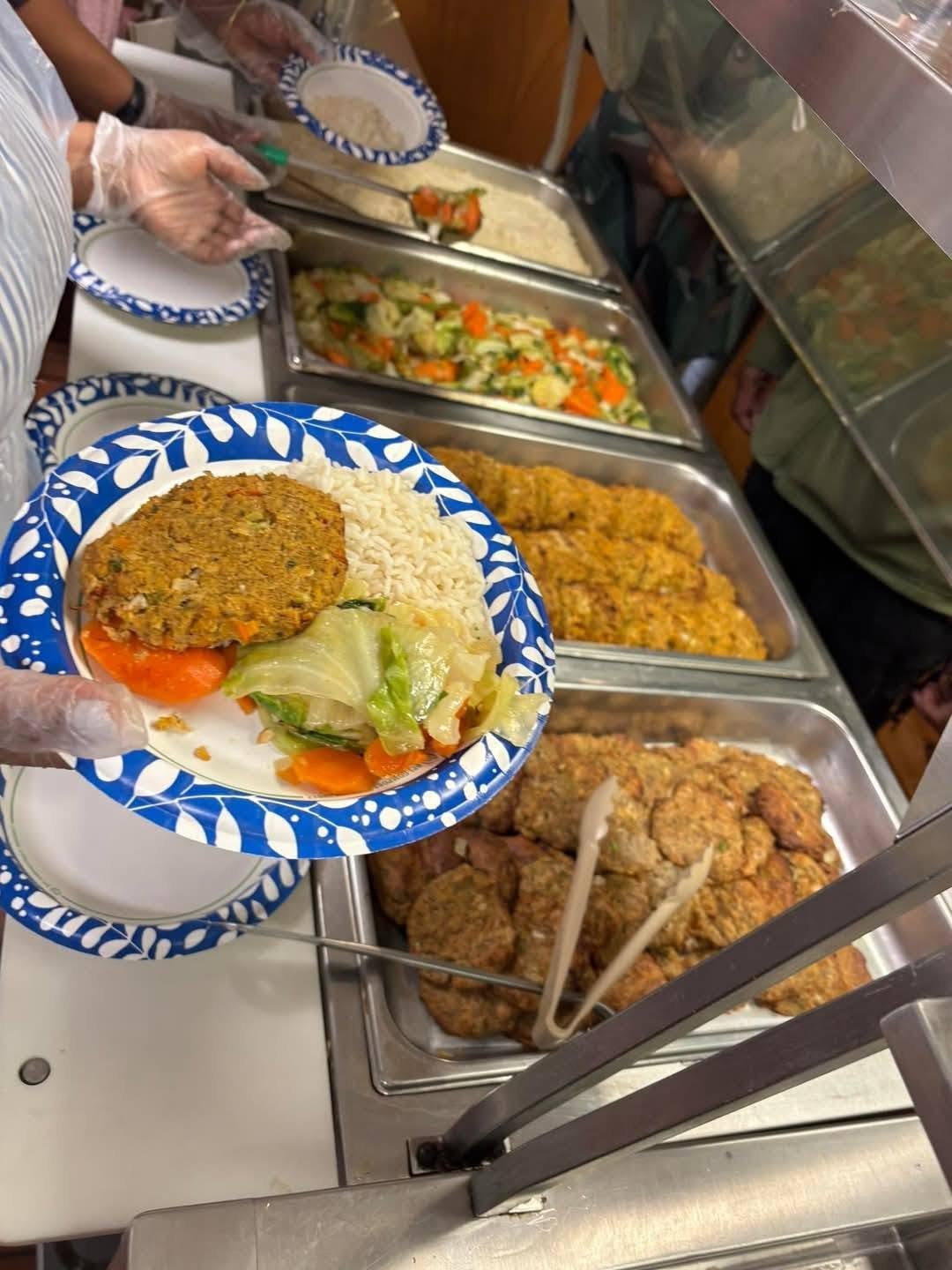
In Detroit, Sisters on a Roll operates on the recovery end of that pipeline. Led by Chef Bee alongside her husband and son, the team saw a contradiction playing out in real time after years of church outreach and feeding people: there was food insecurity and a lack of food sovereignty in their community, even as perfectly good food was being discarded. This tension hits particularly hard in a city where 69% of households were food insecure in 2021, according to the Detroit Food Policy Council. But for Sisters on a Roll, it was clear that the missing piece wasn’t food; it was coordination. There needed to be a reliable way to capture surplus food quickly enough to turn it into meals that can feed people.
In Muskegon, PlantWise Academy, led by Dr. Ines Vigil, started closer to where leftovers were created after a personal moment revealed a structural gap. Her son’s daycare composted, but when he entered kindergarten, composting disappeared from the routine. He began bringing food scraps home in his lunchbox because there was nowhere for them to go at school. The principal was interested, but there was no established process, training, or infrastructure to make composting consistent.
Both women saw “waste” as a sign the system was missing a step. And even though their work sits at different points in the waste stream, their mindset was similar: build something practical, people-centered, and designed to travel beyond one site.
With the problem defined, both organizations focused on redesigning the handoff points where food either gets used or gets wasted.
Detroit’s Rapid-Recovery Playbook
Sisters on a Roll built a unique downstream recovery system by partnering with Metro Food Rescue to source surplus food from places like Trader Joe’s, Gordon Food Service, and Sam’s Club. Their hub at the St. Suzanne Cody Rouge Community Resource Center gives them the infrastructure to turn these donations into prepared meals and use their mobile truck to bring food and service directly to where it’s needed in the community.
A big part of how they make this model work is creating vegan meals that anyone can eat, regardless of dietary needs. Chef Bee leans plant-forward because it removes barriers and makes the food more universally shareable, especially when feeding a wide range of people with different dietary restrictions. It’s a practical choice that supports the mission: get good food to the right people with as few exclusions as possible.
Both teams came into NextCycle Michigan looking for similar things: a clearer roadmap to scale, partners who could help make the model real, and funding pathways to move from a strong idea to consistent operations.
For Sisters on a Roll, the program translated into tangible progress and renewed momentum. They secured funding to begin updating kitchen equipment, refined their direction by pivoting from packaging donated foods toward pursuing freeze-drying, and made operational connections that expanded their circular approach at their resilience hub. NextCycle also mattered on a personal level: Chef Bee described feeling seen and heard, gaining the confidence to speak up and keep doing the work, and turning fear into forward motion through new connections.
Composting as Curriculum and Culture in Muskegon
After coordinating a cross-functional team across the school ecosystem, including district leadership, cafeteria and facilities staff, educators, curriculum developers, community partnerships, and community members, PlantWise Academy developed the school composting program model. It follows a simple sequence that starts with food waste audits to measure what’s being tossed, applies triage to separate compostable items, and routes food scraps to local composting partners like Grand Rapids Compost, another NextCycle Michigan alum.
Students are an essential part of the model, participating in audits and sorting and tying composting to lesson plans so the system becomes a learning experience. PlantWise Academy also uses the program as a workforce pathway, training high school students to help operate the program, build job-ready skills, pursue relevant certifications, and graduate with a practical credential.
Similar to Sisters on a Roll, PlantWise Academy leans into plant-forward nutrition because it creates what Vigil described as “its own cycle of wellness.” As meals become more plant-based, more of what’s left behind can be composted, which makes diversion easier and more visible. That success reinforces healthier food choices, creating a loop where better meals and better waste outcomes strengthen each other.
For PlantWise Academy, NextCycle strengthened the path from concept to implementation. They built connections to EGLE and other relevant organizations, clarified grant and foundation options to reach a break-even point, and advanced a compost loop designed to support schools, including proceeds that can be shared and/or donated back to the school system. They also began exploring an additional partnership with NextCycle Michigan team Organicycle to strengthen local capacity.
From Pilot to Portable Model
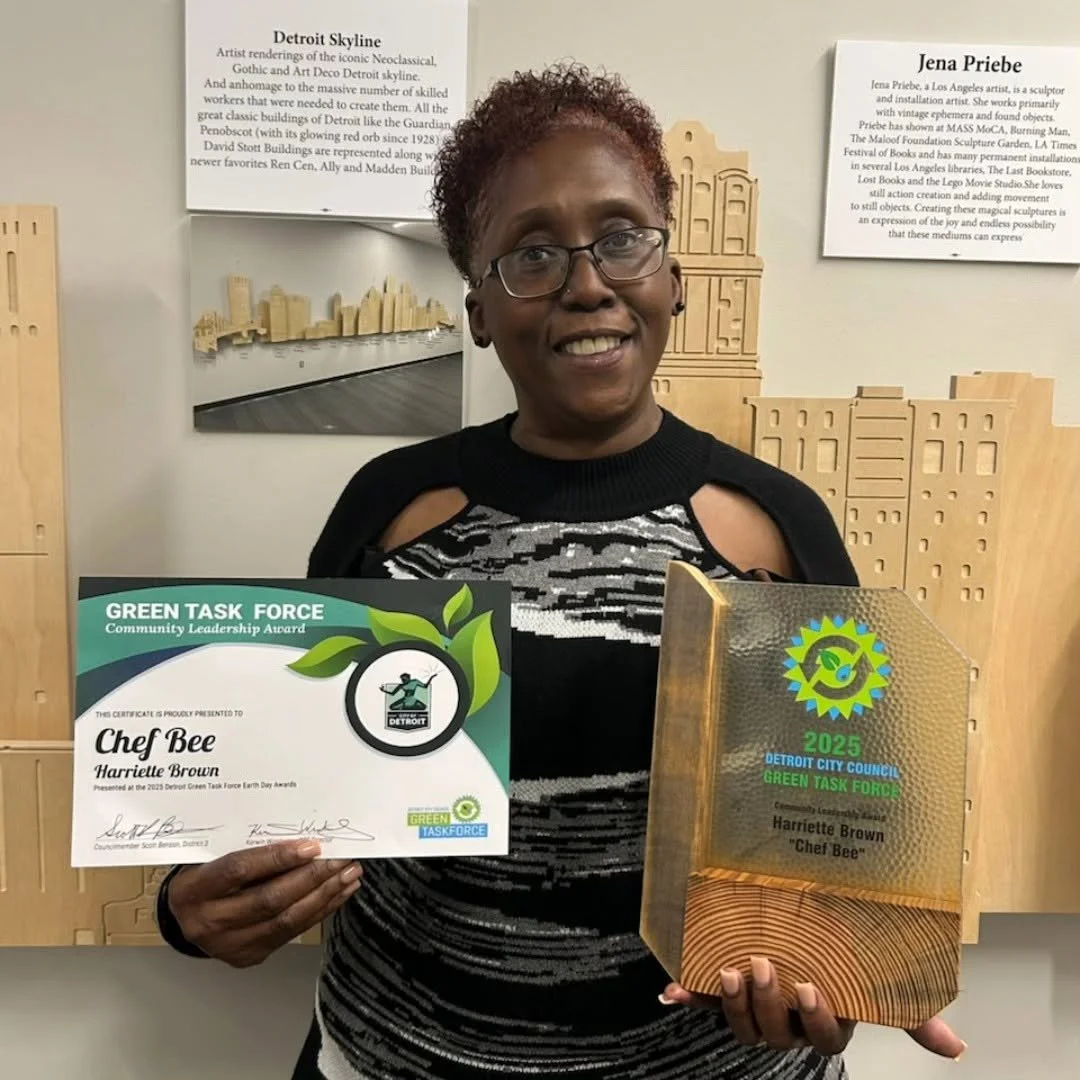
Chef Bee from Sisters on a Roll with the 2025 Detroit City Council Green Task Force Community Leadership Award.
Sisters on a Roll is now focused on getting new kitchen equipment installed to increase consistency and scale, especially for community meal work tied to seniors and students. At the St. Suzanne Cody Rouge hub, they’re also widening the “full-circle” concept by connecting food recovery to broader recycling and composting efforts, with an eye toward a model that can be replicated and mobilized.
For PlantWise Academy, the horizon is about proving and scaling a school-ready system. The immediate next step is launching the pilot site, using funding to purchase materials and begin implementation, then running the program through full school seasons to validate what works with real cafeteria flow, staff time, and student participation. From there, the goal is expansion across Muskegon Public Schools, moving from one school to the full district once the first model is stable.
Put together, the two efforts show unique approaches to food scrap management: redirecting edible surplus before it’s discarded, while also redesigning daily routines so fewer scraps become waste in the first place, all through models built to be replicated.
When the Blueprints Met
In November 2025 at the Michigan Sustainability Conference (MISCON), PlantWise Academy and Sisters on a Roll connected and recognized shared DNA in their approach: a practical, replicable mindset and complementary strengths. The conversation quickly turned to how they could support each other as both models were growing.
As they now explore ways to work together, the story becomes less about two separate projects and more about a scalable playbook for communities that want to cut waste, feed people, and build healthier routines at the same time.